
Guide · Northern Moselle
Things to do near Thionville: 15 places nobody has ever told you about
Most people drive through northern Moselle without stopping. They race on to Luxembourg, think "industrial zone", and picture somewhere you only pass through. Big mistake.
Less than forty minutes from Thionville lie a 71-metre blast furnace you can actually visit, ten kilometres of military tunnels explored by little train, the village that gave its name to a Europe without borders, and a 15th-century castle that once served as headquarters to an English duke. All of it in a triangle where France, Luxembourg and Germany almost touch.
Here are the 15 best things to do near Thionville, Hayange and Hettange-Grande. Fair warning: this list may well make your stay longer.
Steel and iron: the valley that forged France
1. The U4 blast furnace, Uckange
This is the giant of the Fensch Valley. Built from 1890 and shut down in 1991, the U4 blast furnace is one of the few surviving witnesses to 20th-century pig-iron production still preserved in France. Its chimney rises to 82 metres, its platform to 71 metres, on a 12-hectare site. In summer it stays open until midnight on Saturdays: the light on the rusting steel alone is worth the trip.
About 12 minutes from Hayange. Open April to early November, closed Mondays. Self-guided visit €4.
→ Everything you need to know in our guide: the Fensch Valley, from the blast furnace to the iron mines.
2. The Neufchef iron mine
Put on a helmet and head down into a real mine: 800 metres of tunnels that tell the story of the miners' work from the 1830s to the 1980s. Bring a jumper, it's cool underground.
About 8 minutes from Hayange. Tuesday to Sunday, afternoons. Best to arrive before 3 pm.
3. The Aumetz mine head
Its 35-metre headframe is a listed historic monument and, according to the museum, the last of its kind in the Lorraine iron mines. You'll see the forge, the engine room and the compressors: the behind-the-scenes of a mine that employed 800 people until 1983.
4. Château de Wendel, Hayange
The cradle of a dynasty: for nearly three centuries the de Wendel family, ironmasters, lived here. Today it houses the local authority's headquarters and is mostly enjoyed from the outside, with its listed dovecote and gates.
Underground: the Maginot Line
5. Hackenberg, the largest fort on the Maginot Line
19 combat blocks, 10 kilometres of tunnels, a vintage electric train and a 163-tonne turret you can still watch move. Hackenberg is the largest fort on the whole Maginot Line. Block 8 still bears the scars of the fighting of November 1944.
About 25 minutes from Hettange-Grande. 2.5-hour guided tour; it's 12 °C inside.
6. The Immerhof fort, Hettange-Grande
Less famous, more intimate. Built between 1930 and 1935, it is one of the only Maginot Line forts built in the open air, because the ground was too soft to bore tunnels. It housed nearly 200 men. It has been a museum since 1975.
→ Both forts in detail: a Maginot Line tour around Thionville.
7. The Hettange-Grande geological reserve
A name known to geologists the world over: the Hettangian, the first stage of the Jurassic (roughly 200 million years ago), takes its name from Hettange-Grande. The old quarry has become Lorraine's only geological nature reserve. You walk among layers of fossilised shells on waymarked trails, taking nothing home.
Thionville, the underrated town
8. The Tour aux Puces
A fourteen-sided tower, the last remnant of the castle of the Counts of Luxembourg, dating from the late 11th century. And no, fleas ("puces" in French) have nothing to do with it: the name comes from a mistranslation of Luxembourgish. The archaeology museum is free for under-26s.
9. The belfry
First mentioned in 1363 and topped with an onion dome in the 17th century, it houses four bells, including "la grosse Suzanne" (Big Suzanne), weighing more than two tonnes. This is where the French flag was raised on 11 November 1918.
10. Fort de Guentrange
On the hill, 200 metres above Thionville: a German fortress built between 1899 and 1906 for 2,000 soldiers, with a military bread oven that still works.
Where three borders meet
11. Schengen, Luxembourg
On 14 June 1985, aboard a boat moored here, five countries signed the agreement that abolished border checks. Since 2025 that boat has been part of the museum: you can step into the room where it was signed.
12. Rodemack, "the little Carcassonne of Lorraine"
Listed among the Most Beautiful Villages of France (Plus Beaux Villages de France) and ringed by 700 metres of 14th-century ramparts. Barely 12 minutes from Hettange-Grande.
13. Château de Malbrouck, Manderen
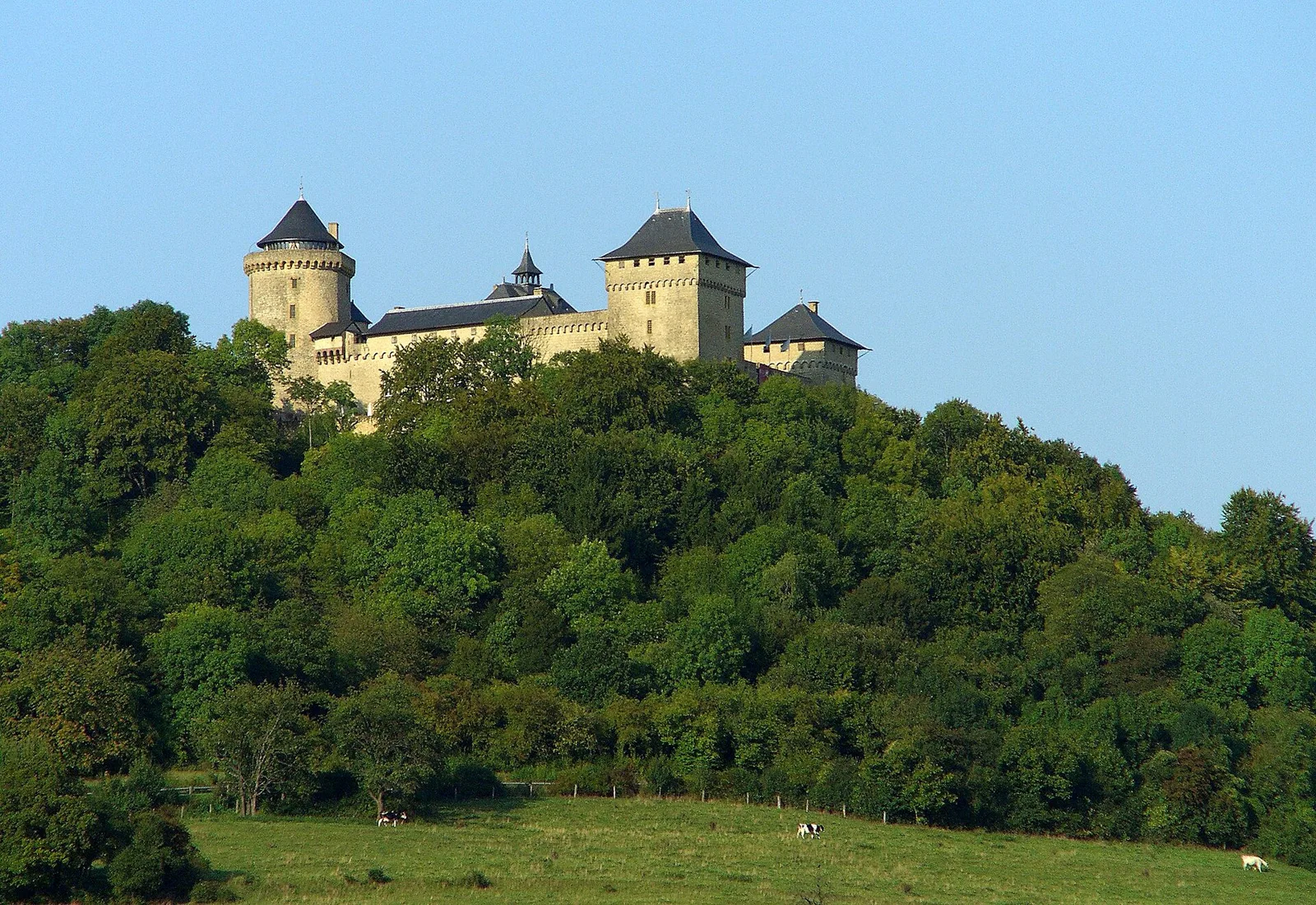
Begun in 1419, it owes its name to the Duke of Marlborough, who made it his headquarters in 1705. Rescued from ruin by the département, it bills itself as the only fully preserved 15th-century castle in Lorraine.
14. The Moselle wine route
It often goes unnoticed: French Moselle produces appellation wines (AOC since 2010), mostly whites, led by Auxerrois and Pinot Gris. A 46-km wine route links the winegrowing villages from Contz-les-Bains to Sierck-les-Bains.
→ The full circuit: Schengen, Rodemack and the three borders.
And there's more…
15. Luxembourg City, half an hour away
The UNESCO-listed Bock Casemates, the Mudam designed by I. M. Pei… and free public transport across the entire country. Park on the French side, hop on the train, and the day costs next to nothing.
→ Our how-to guide: visiting Luxembourg from France.
For families, also keep in mind Amnéville Zoo (2,000 animals), Thermapolis and its 38 °C baths, and the Walygator theme park, all less than 30 minutes away.
Where to stay to see it all?
To explore the whole area, you need to be in the middle of the triangle. That's exactly where our apartments are.
- In Hayange, seven apartments in the heart of the Fensch Valley: the U4 blast furnace and the Neufchef mine are just minutes away.
- In Hettange-Grande, three large apartments, a stone's throw from the Immerhof fort and less than a quarter of an hour from Rodemack and the Luxembourg border.
Separate beds, a fully equipped kitchen, wifi, self check-in: drop your bags and head straight back out to explore. And when you book directly on our website, you pay less than on the booking platforms.
Frequently asked questions
What to do in Thionville when it rains?
The Tour aux Puces and its museum, the Neufchef iron mine, Hackenberg (an underground tour), Thermapolis in Amnéville, or the museums of Luxembourg.
How long do you need to visit the area?
A weekend is enough for the must-sees (U4, Hackenberg, Rodemack, Schengen). Allow 4 to 5 days to see everything without rushing, Luxembourg included.
What is the best time of year to visit?
April to October, when the major sites (the U4 blast furnace, Château de Malbrouck, Hackenberg) are open. In December, Thionville's Christmas market and ice rink are well worth the trip.