
Heritage · Three-borders region
Knights, legends and three countries on the horizon: the castles of the three borders
Every French child knows the song "Malbrouck s'en va-t-en guerre" (Malbrouck has gone to war). Few know that Malbrouck was a real English duke. And that the castle named after him still stands on a hilltop in Moselle, behind walls up to 18 metres high.
Half an hour from our apartments, northern Moselle hides two fortresses that have seen dukes, knights and entire armies come and go. And from their ramparts, you can see three countries.
Château de Malbrouck: the castle from the song
A knight, four towers and a fortress built for sieges
It all starts in 1419. The knight Arnold VI of Sierck builds a fortress on a rocky spur above the village of Manderen. Back then it's called Meinsberg Castle. By 1434 it's declared strong enough to "withstand a siege".
Four corner towers are linked by curtain walls 12 to 18 metres high. Their names sound like a fairy tale: the Lantern Tower, the Witch's Tower, the Bald Rock Tower and the Ladies' Tower.
1705: the duke who gave the castle its name
The name Malbrouck arrives almost three centuries later. In 1705, during the War of the Spanish Succession, the English commander John Churchill, Duke of Marlborough, gathers a huge army near Trier to invade France and sets up his headquarters right here.
Facing him, French Marshal Villars holds the border with a much smaller force. The two armies watch each other for about ten days. Marlborough's reinforcements never come, supplies run short, and the duke turns back towards Trier. He never takes France, but he leaves his name on the castle, and the French turned him into a mocking nursery song.
From ruin to rebirth
Sold off as national property in 1793, the castle slowly crumbled. The Moselle département bought the ruins in 1975 and restored them between 1991 and 1998, using stonemasons, carpenters and traditional techniques. The result is striking: a 15th-century castle that looks straight out of the Middle Ages.
Visiting Malbrouck Castle: season and practical info
Inside, a permanent trail tells six centuries of history in a playful way, with an audio guide. The castle also hosts major temporary exhibitions, workshops, concerts and seasonal festivals such as "Bêtes et Sorcières" (Beasts and Witches). Allow about 1 hour 15 minutes.
- Season: April to autumn, usually closed on Mondays;
- Getting there: Manderen-Ritzing, about 30 minutes from Hettange-Grande and 45 minutes from Hayange;
- Hours and prices: they change with the season, so check the official website moselle-culture.fr (Château de Malbrouck page). Children under 12 go free.
Walk the ramparts and the view rolls over the hills of the three-borders region, where France, Germany and Luxembourg meet.
The Castle of the Dukes of Lorraine in Sierck-les-Bains
A fortress hanging above the Moselle
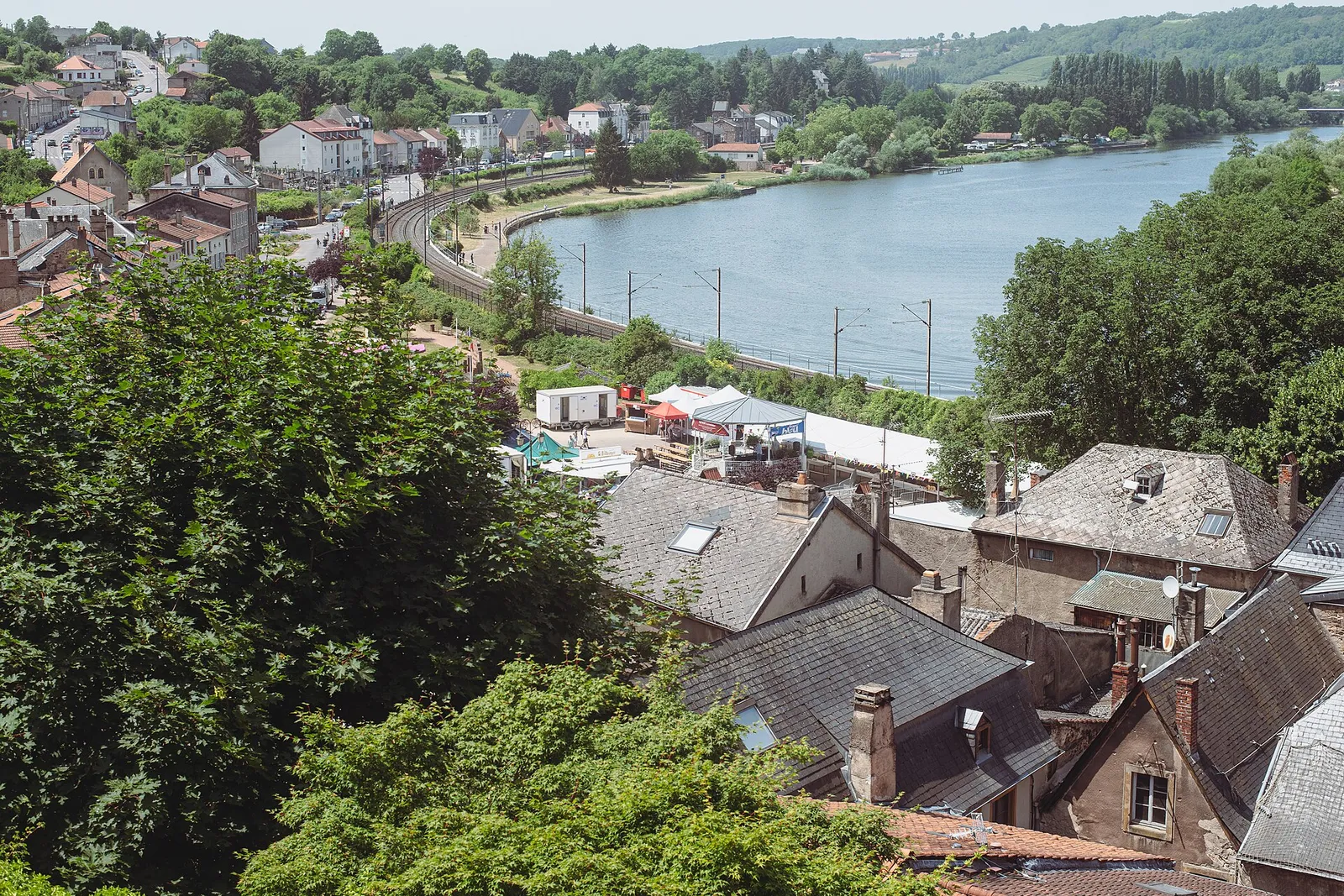
18 km north-east of Thionville and just 3 km from the Luxembourg and German borders, Sierck Castle sits on a rocky promontory where the Montenach valley meets the Moselle. From the ramparts, the river stretches beneath you, curves around the Stromberg hill and flows on towards Germany.
The first written record dates from 1067, when Duke Gérard of Alsace signed a charter here, and coins were even minted on site. For centuries the Dukes of Lorraine stayed here; Duke Charles IV lived here with his court for several years in the 17th century.
A thousand years of sieges
The castle's history follows a strange rule: when the duke was home, the fortress held. It resisted in 1131 and 1516. When he was away, it fell: to Charles the Bold in 1475, to the French in 1633, and to the Grand Condé's troops in 1643.
After Sierck became French in 1661, the castle lost its role as a residence. In 1673, Louvois, Louis XIV's war minister, ordered it dismantled. The twist: in 1705, the very year Marlborough camped at Malbrouck, Marshal Villars had it repaired. It was only decommissioned in 1866.
The legend of the fire wheel
Legend says that in the 14th century, under Duke John I, a flaming wheel rolled down from the nearby Stromberg hill during the midsummer Saint John's festivities.
The tradition is very much alive. Every year on Saint John's Eve, the people of Contz-les-Bains set fire to a straw-wrapped wheel at the top of the Stromberg and send it rolling down. If it reaches the Moselle, the winegrowers expect a good harvest. If it stops before halfway, Contz owes Sierck cherries.
Sierck medieval festival: the "Fête du Château"
The big event is the Fête du Château, a medieval festival that has been running for over twenty years, traditionally on a weekend in late August. Medieval market, costumes, shows: the fortress comes back to life like the court of the Dukes of Lorraine. Check this year's dates on the official website chateau-sierck.com.
The rest of the season, the castle offers self-guided and guided tours, treasure hunts, an escape game, medieval activities and a Christmas village at the end of the year. It's open from April to mid-November (1 April to 11 November in 2026). About 25 minutes from Hettange-Grande and 30 minutes from Hayange.
The Stromberg: the best view of the Moselle bend
For the perfect photo, head up the Stromberg between Sierck-les-Bains and Contz-les-Bains. This hill is almost wrapped by the Moselle on its south and east sides, with a dizzying view of the river, the vineyards and the village.
The Stromberg trail, starting in Contz-les-Bains, crosses protected limestone grasslands on both sides of the Luxembourg border. At sunset, when the light turns the Moselle gold, you'll understand why the dukes picked this spot.
And Rodemack, the "little Carcassonne of Lorraine"
The third fortress in the area, Rodemack and its medieval walls deserve a morning of their own. We cover it in a separate guide: Schengen, Rodemack and three borders in a day.
Cyclists will enjoy the "balade des trois châteaux", a bike route linking Rodemack to Malbrouck via Sierck-les-Bains.
Our itinerary: the three-border castles in one day
| When | Stop | Drive |
|---|---|---|
| Morning | Castle of the Dukes of Lorraine, Sierck-les-Bains | about 25 min from Hettange-Grande |
| Late morning | Walk on the Stromberg, Moselle view | a few minutes |
| Afternoon | Malbrouck Castle, Manderen | about 15–20 min from Sierck |
| Back | Hettange-Grande or Hayange | 30–45 min |
With kids, start with Malbrouck: the playful trail and the Witch's Tower always work. In summer, plan your trip around the Sierck Fête du Château.
→ More ideas: things to do around Thionville, the Maginot Line at Hackenberg or, just across the German border, the Saarschleife.
Where to stay to visit the castles of Moselle
Our three apartments in Hettange-Grande make the ideal base: Sierck-les-Bains is about 25 minutes away, Malbrouck half an hour, Rodemack right nearby. Our seven apartments in Hayange, in the Fensch valley, are about 15 minutes from Thionville.
From 2 to 12 guests depending on the apartment, with separate beds, a fully equipped kitchen, Wi-Fi, a Smart TV and a Nespresso machine for that coffee before you storm the ramparts. Bed linen and towels included, self check-in, WhatsApp support.
Booking directly is cheaper than on Airbnb or Booking.com, with free cancellation up to 5 days before arrival. Check availability and book.
Frequently asked questions
Why is it called Malbrouck Castle?
The name comes from John Churchill, Duke of Marlborough, who made it his headquarters in 1705. The French nursery song "Malbrouck s'en va-t-en guerre" pokes fun at the same duke.
When is Malbrouck Castle open?
From April to autumn, usually closed on Mondays. Hours and prices change with the season: check moselle-culture.fr.
When is the Sierck-les-Bains medieval festival?
The Fête du Château traditionally takes place on a weekend in late August. Exact dates are published each year on chateau-sierck.com.
Can I visit Malbrouck and Sierck on the same day?
Yes. The two castles are only about 15 minutes' drive apart, and about half an hour from Hettange-Grande.
Are the castles good for kids?
Yes. Malbrouck has a playful visitor trail, Sierck offers treasure hunts and medieval activities, and the Fête du Château is designed for families.